Fire Sleeve Manufacturer in India
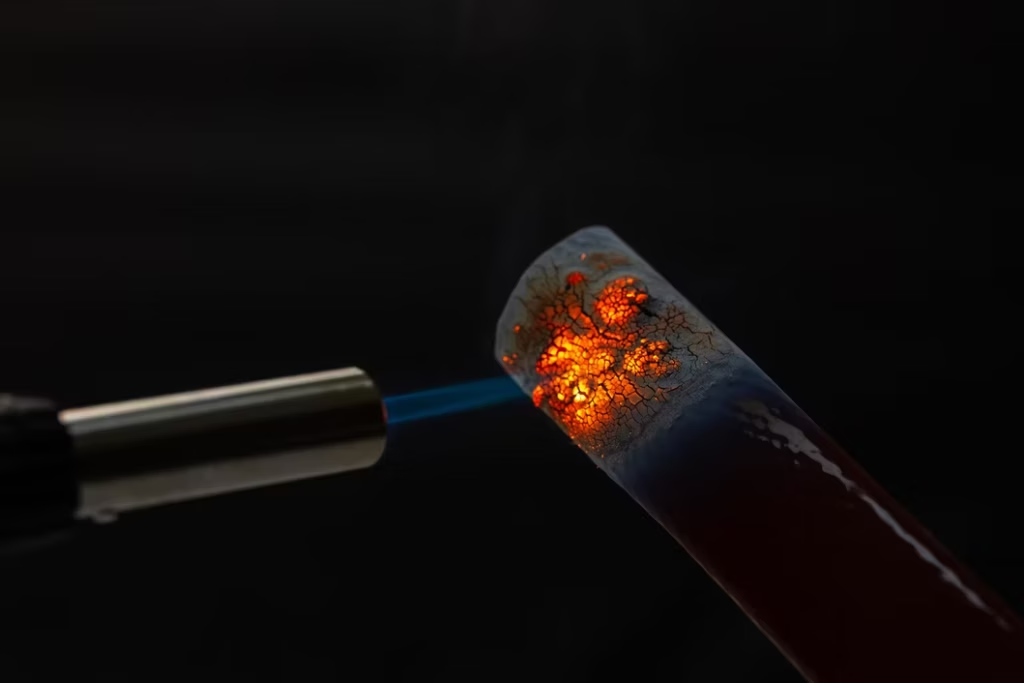
In the event that cables, hoses, and pipes are routed through areas in which splashes of molten material, intermittent flames, or excessive heat radiation is possible, then basic insulation is not adequate for the situation. The fire sleeve or pyro sleeve was created specifically for such an environment, which includes silicon coated braided fiberglass capable of withstanding up to 260°C continuously and up to 1600°C briefly in flames.
As a fire sleeve manufacturer in India, Harnawa Inc. provides its fire resistant sleeves to automobile, industrial, and heavy equipment manufacturing industries all across India with the certification of international quality along with nationwide deliveries from Mumbai, making us a known Electrical Insulation Material Manufacturer in India.
What Makes a Fire Sleeve Different From Standard Heat Protection
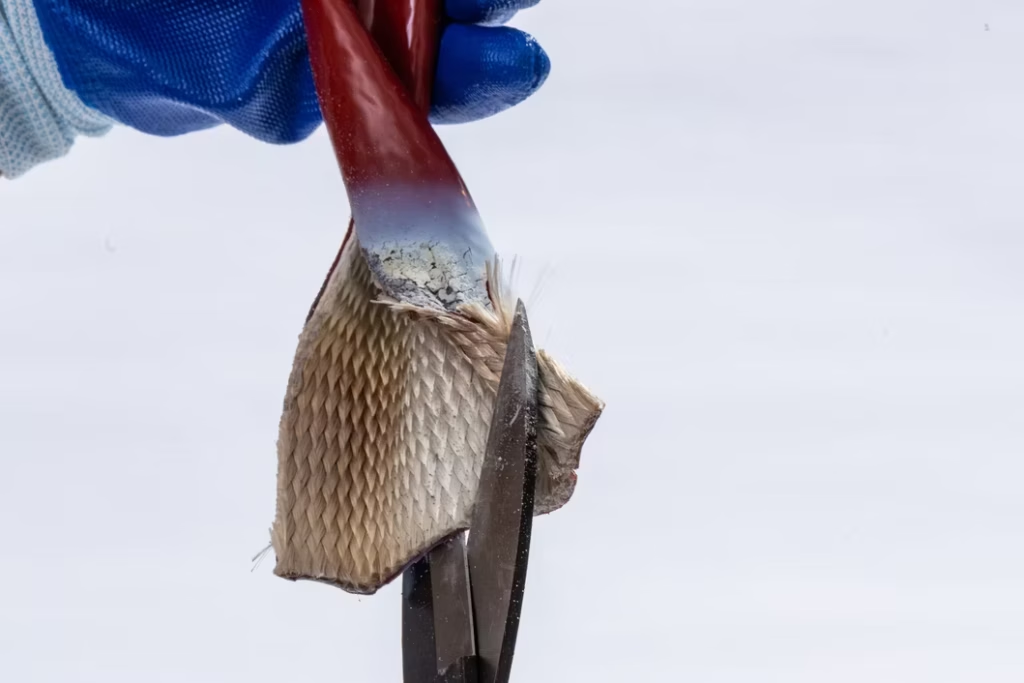
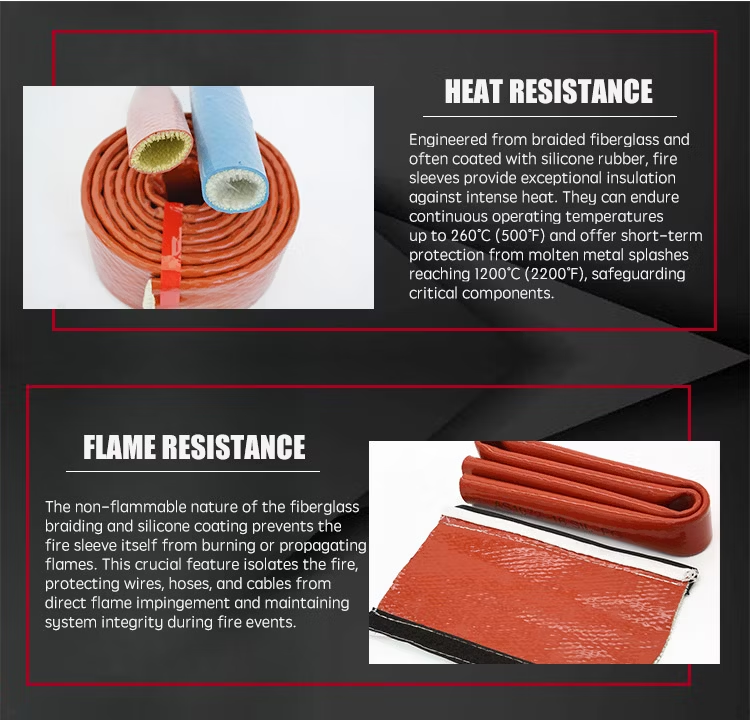
Thermal protection sleeves are primarily built to resist steady-state high temperature conditions over a prolonged period of time. Fire protection sleeves, on the other hand, have been constructed in such a way that they can withstand the impact of direct flames as well as molten splash, situations which will cause a regular heat resistant sleeve to collapse immediately. The reason behind the dual nature of the fire sleeve lies in its construction from braided fiberglass core covered with silicone rubber material which can withstand temperatures up to 260°C continuously and 1300-1600°C momentarily.
Built for the Worst-Case Scenario
Braided Fiberglass Core — The source of strength and natural fireproof properties that serve as the basis for protection offered by this sleeve.
Silicone Rubber Coating — Provides resistance to hydraulic fluid, lubricating oil, fuel, moisture, and abrasion — in addition to resistance to fire and heat.
Two-Temperature Rating — Continuously operates at 260°C, with short-term flame resistance of 1300–1600°C, for protection against ordinary heat exposure and emergencies involving flames.
Rated Voltage Up to 10 kV — Offers additional electrical insulation along with thermal protection when cables pass through areas exposed to both fire and electricity.
Chemical & Fluid Resistance — Resistant to hydraulic fluid, oils, and fuels, typical in the environments where this sleeve is applied.
Why Fire Sleeve Matters Where It’s Installed
In hydraulic lines, oil lines, and machines used in industry, the actual threat is not the operating temperature of the machine but the unexpected threat – a spark, molten splash from another process, and even a flash of flame. The installation of a fire resistant sleeve over any hoses or cables that are routed through such areas serves as a final protection measure and saves vital seconds of time to stop a local fire from destroying hydraulic lines, electrical conduits, or fuel systems.
Applications of Fire Sleeve / Pyro Sleeve
- Hydraulic Hose Protection — providing protection for hydraulic hoses from heat, splashing of melted materials, and flames in the vicinity of hot machinery
- Oil/Fuel Lines — protecting fuel lines and lubricant lines in engine compartments and industrial machinery
- Electric Motor Protection — protecting cable assemblies in electric motors that are in proximity to fire hazard areas
- Industrial Machinery — protecting hoses, cables, and pipes near furnaces, welding processes, and handling of melted materials
- Automotive/Heavy Duty Equipment — protecting hoses and cables near exhaust in engines and heavy duty equipment
Fire Sleeve vs. Heat Reflective Sleeving — Choosing the Right Protection
Since both products protect against extreme heat, it’s worth understanding when each is the right specification:
| Property |
Fire Sleeve / Pyro Sleeve |
Heat Reflective Sleeving |
| Primary Function |
Survives direct flame & molten splash |
Reflects radiant heat away from source |
| Continuous Temperature |
Up to 260°C |
Up to 250°C |
| Peak/Short-Term Rating |
1300–1600°C (flame contact) |
Not flame-rated |
| Voltage Rating |
Up to 10 kV |
Not rated for electrical voltage |
| Best Suited For |
Direct flame/spark exposure risk zones |
Radiant heat from nearby hot components |
Main point: If there is a possibility of direct contact of flames, sparks, and/or splashing of molten material, then use of fire sleeves is recommended. However, if it is only the radiating heat from a neighboring hot part (such as an exhaust pipe adjacent to a cable), then heat reflecting sleeves would be a better option from the cost perspective.
Completing Your Thermal & Fire Protection System
Fire sleeve is most effective as part of a broader protection strategy. Depending on your installation’s full range of thermal, mechanical, and electrical demands, consider pairing it with:
Sourcing your complete fire and thermal protection system from a single certified supplier ensures every layer is built to work together.
Fire Sleeve Manufacturer in India — Why Choose Harnawa Inc.
Harnawa Inc. is a reputable supplier of fire sleeves in India, producing fire resistant sleeves made of silicone coated fiberglass up to 1600 degrees Celsius, along with a range of electrical and thermal insulating products used by the auto and industrial sectors.
What sets us apart:
- Rating of continuous operation up to 260°C, short-term flame rating up to 1300-1600°C
- Rated voltage up to 10 kV for both electrical and fire safety purposes
- Diameter range up to 6mm to 127mm with accurate tolerances
- Nationwide distribution network including Mumbai, Delhi, Pune, Ahmedabad, and beyond
- Quality certification (UL, CE, RoHS, ISO 9001:2015,REACH)
Frequently Asked Questions
1.For what purposes is fire sleeve intended?
Fire sleeves (pyro sleeves) provide protection against high temperatures, molten splash, and occasional flames in hydraulic systems, fuel/oil lines, motors and industrial equipment.
2.Up to which temperature is fire sleeve resistant?
The sleeve can operate continuously up to 260°C and resist occasional flames up to 1300-1600°C.
3.Is there any difference between fire sleeve and heat reflective sleeving?
There is difference: fire sleeve is meant to resist occasional flames and molten splash, heat reflective sleeve reflects radiant heat of an object located nearby.
4.Does fire sleeve insulate electrically?
Yes, the fire sleeve made by Harnawa Inc. has voltage resistance up to 10 kV.
5.In which industries fire resistant sleeves are used most?
Fire sleeves are used in many industries including electrical, automotive, industrial and heavy machinery industries for hydraulic hoses and fuel lines protection.